


Dust collectors are advanced industrial air filtration systems designed to remove dust particles, fumes, smoke, and other airborne contaminants generated during manufacturing and material handling processes. They help maintain a clean working environment, improve air quality, protect machinery, and ensure compliance with industrial safety standards.
Dust collection systems are widely used in industries such as cement plants, steel industries, foundries, chemical processing, food processing, pharmaceuticals, woodworking, and bulk material handling applications.
A dust collector works by capturing contaminated air through ducting systems and passing it through specially designed filter elements. The collected dust particles are separated from the airflow, while clean air is released back into the environment. These systems improve production efficiency by reducing dust accumulation on equipment and preventing operational issues.
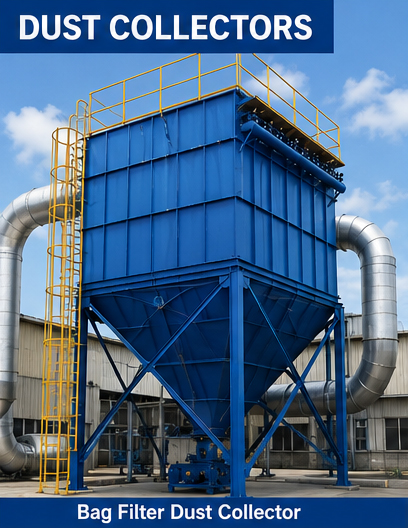
1. Bag Filter Dust Collectors
Bag filter systems use high-quality filter bags to capture fine and heavy dust particles. They provide excellent filtration efficiency and are suitable for continuous industrial operations.
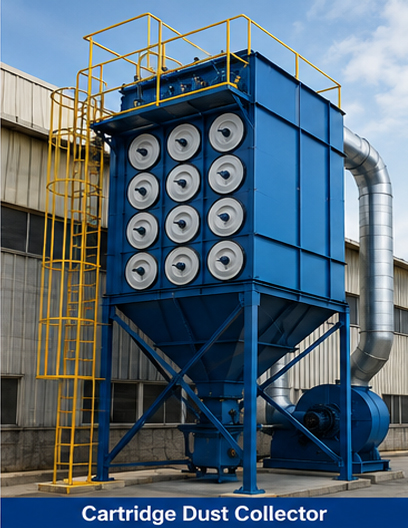
2. Cartridge Dust Collectors
Cartridge filters offer compact designs with high filtration performance. They are commonly used where space is limited and high dust removal efficiency is required.
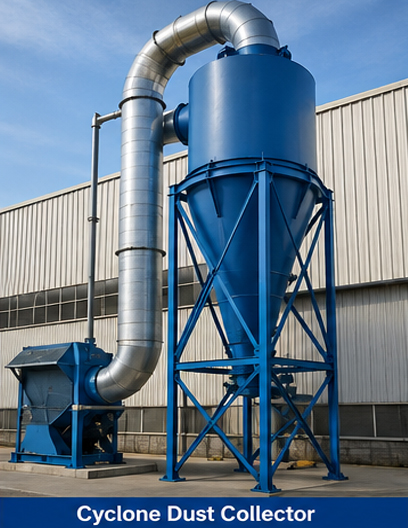
3. Cyclone Dust Collectors
Cyclone collectors use centrifugal force to separate larger dust particles from air streams. They are often used as pre-filters before advanced filtration systems.
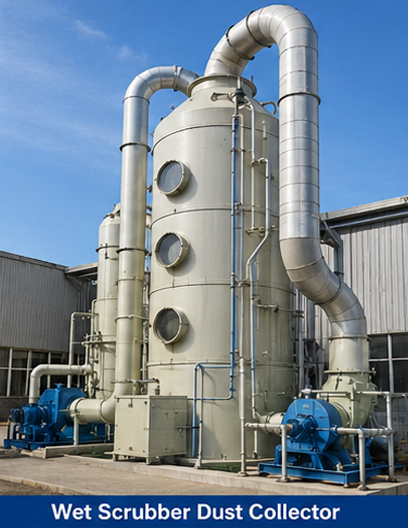
4. Wet Scrubber Dust Collectors
Wet scrubbers use liquid spray systems to remove dust particles and gases from industrial exhaust air.
Control valves are essential components used in industrial automation systems to regulate the flow, pressure, temperature, and level of liquids, gases, and materials within a process. They provide accurate control and smooth operation by adjusting the flow rate according to system requirements.
Control valves are widely used in process industries, power plants, chemical plants, water treatment facilities, and automated production systems.
A control valve receives signals from a controller or automation system and adjusts its opening or closing position to maintain the desired operating conditions. This ensures efficient process control, reduces energy consumption, and improves overall system performance.
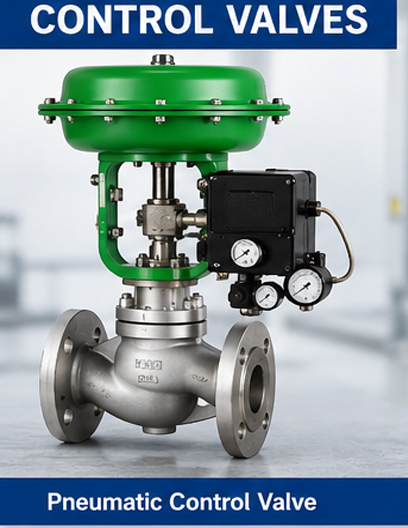
1. Pneumatic Control Valves
Operated using compressed air, pneumatic valves provide fast response and reliable control for industrial automation systems.
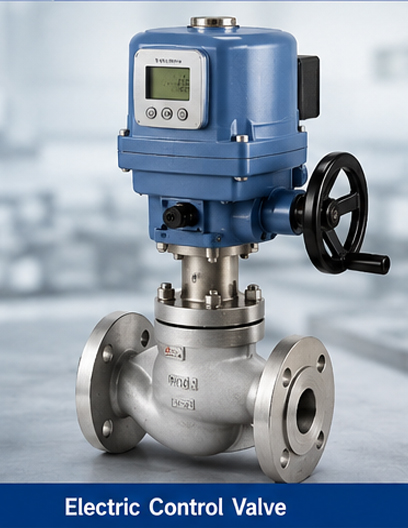
2. Electric Control Valves
These valves use electric actuators and are suitable for applications requiring precise automated control.
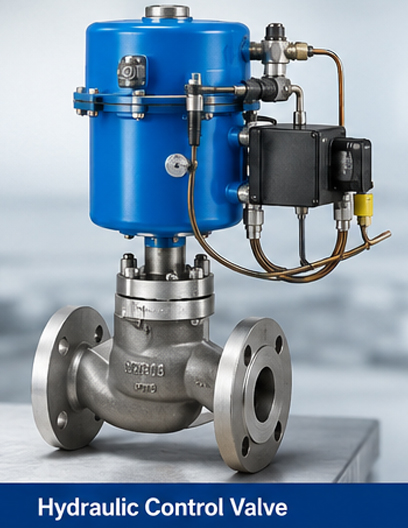
3. Hydraulic Control Valves
Hydraulic valves are used in heavy-duty systems where high pressure and accurate flow control are required.
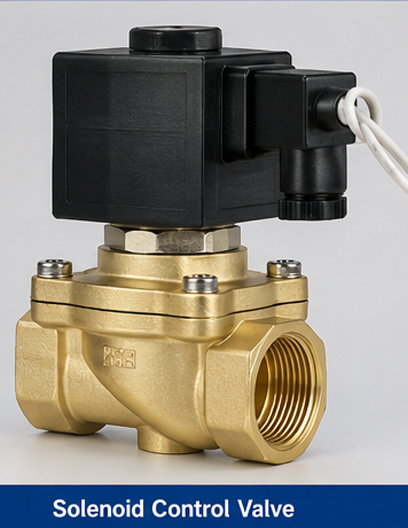
4. Solenoid Control Valves
Solenoid valves are electrically operated valves commonly used in automated fluid and air control applications.
Dust collectors and control valves work together in many industrial systems to maintain efficient operation. Control valves regulate airflow, pressure, and cleaning cycles inside dust collection systems, ensuring effective dust removal and continuous performance.
Modern dust collection and valve control systems can be integrated with PLC and automation technologies to provide smart monitoring, improved efficiency, and reliable industrial performance. These solutions support cleaner production environments and help industries achieve higher productivity with reduced operational costs.